English
 English
 Español
What Are You Looking For?

Tongyuan Electronic Co., Ltd.


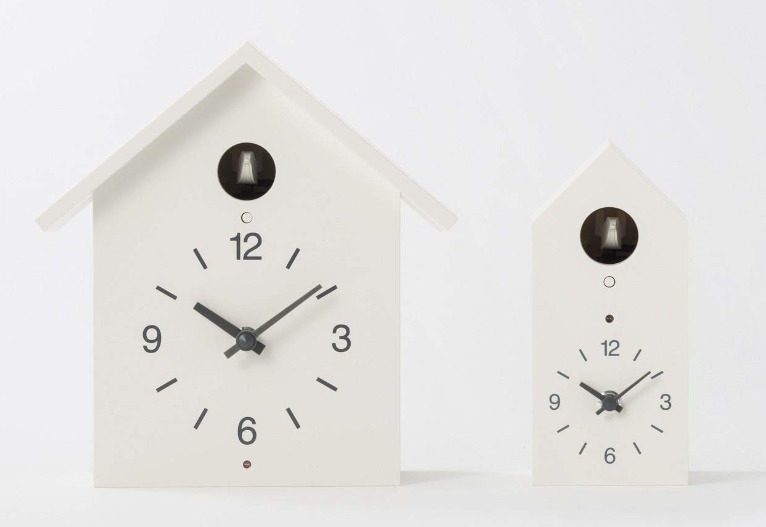
When people think of modern cuckoo clocks, one name is mentioned again and again: MUJI. Quietly understated yet instantly recognizable, the MUJI cuckoo clock has become a design icon—loved not only in Japan, but around the world. Its popularity is no accident. It is the result of a perfect balance between tradition, minimalism, and emotional design.
So what exactly makes the MUJI cuckoo clock so iconic and enduringly popular?
MUJI’s design philosophy is famously restrained: “This will do.” The cuckoo clock embodies this idea perfectly.
Unlike traditional cuckoo clocks filled with carvings, colors, and decorations, the MUJI cuckoo clock reduces the form to its essence:
A simple house silhouette
Clean white or natural wood finish
Clear, easy-to-read clock face
No unnecessary visual noise
This radical simplicity makes the clock feel timeless rather than trendy, allowing it to blend seamlessly into homes year after year.
The MUJI cuckoo clock reflects core principles of Japanese aesthetics:
Ma (間) – the beauty of space and emptiness
Shibui – quiet elegance without excess
Function-first design – beauty comes from usefulness
Instead of shouting for attention, the clock quietly coexists with its environment. It complements Scandinavian, Japandi, modern, and even traditional interiors—making it unusually versatile.
The cuckoo clock is historically European, often associated with the Black Forest. MUJI took this strong cultural symbol and gently reinterpreted it for modern living.
Key adaptations include:
A soft, non-aggressive cuckoo sound
Adjustable or light sound volume
Automatic night silence on many versions
A calmer, more bird-like tone
The result is a cuckoo clock that feels comforting rather than intrusive, suitable for apartments, bedrooms, and family homes.
One of the MUJI cuckoo clock’s greatest strengths is that it creates emotion without decoration.
The hourly cuckoo sound becomes:
A gentle reminder of time passing
A comforting daily rhythm
A subtle connection to nature
It turns timekeeping into an experience, not just a function. This emotional quality is especially appealing in a digital age dominated by silent screens and notifications.
MUJI’s cuckoo clock avoids extremes:
Not too playful
Not overly serious
Not traditional, yet not futuristic
This balance allows it to appeal across:
Age groups
Cultures
Interior styles
It works just as well in a child’s room as it does in a minimalist living room or a creative studio. Few products manage this level of universality.
MUJI’s global reputation plays a major role in the clock’s popularity. Customers trust that a MUJI product will be:
Well-designed
Thoughtfully engineered
Durable and practical
Free from unnecessary gimmicks
The cuckoo clock fits seamlessly into MUJI’s broader ecosystem of calm, honest, everyday objects—reinforcing its credibility and long-term appeal.
Long before “quiet luxury” became a trend, MUJI was already practicing it. The cuckoo clock is not flashy, expensive-looking, or status-driven. Instead, it signals:
Taste over trend
Calm over noise
Longevity over novelty
Owning a MUJI cuckoo clock often says more about a person’s values than their budget.
The MUJI cuckoo clock is iconic not because it tries to stand out, but because it refuses to. By combining:
A familiar, emotionally rich concept
Minimalist Japanese design principles
Gentle sound design for modern life
MUJI transformed a traditional object into a global design classic.
In a world full of distractions, the MUJI cuckoo clock reminds us that good design doesn’t need to be loud to be powerful—sometimes, a soft cuckoo on the hour is more than enough.


 IPv6 network supported