Still Waking Up to an Alarm? Here's Why You Should Use Light Instead
Sep 23, 2025
Light plays a key role in regulating our sleep-wake cycle and can help ease you into waking up.
Most of us know it all too well -- that painful feeling when the alarm goes off long before you're ready to wake up. No matter how many times you hit snooze, it jars you half-awake again -- no less groggy and just a little more irritated.
This harsh routine never gets any easier because it works against the human body's natural way of waking up. Our lifestyles may be less reliant on natural light than at any other time in history, but our bodies are still stubbornly dependent on it.
Since the time chance, have you noticed yourself feeling ready for bed earlier? There's a reason for that. Like it or not, light and darkness play an important role in our sleep-wake cycles. This means you can use light in the morning to help you wake up more easily.
Let's look at how light interacts with your body (it can even be therapeutic!) and how you can use real and simulated natural light to ease into your day.
How to wake up to light
Before you use the sun for morning light therapy, you can take a few steps to use sunlight (and some artificial help) to boost your chances of waking up naturally without a normal alarm. Here are a few steps you can take to rely on light in the morning:
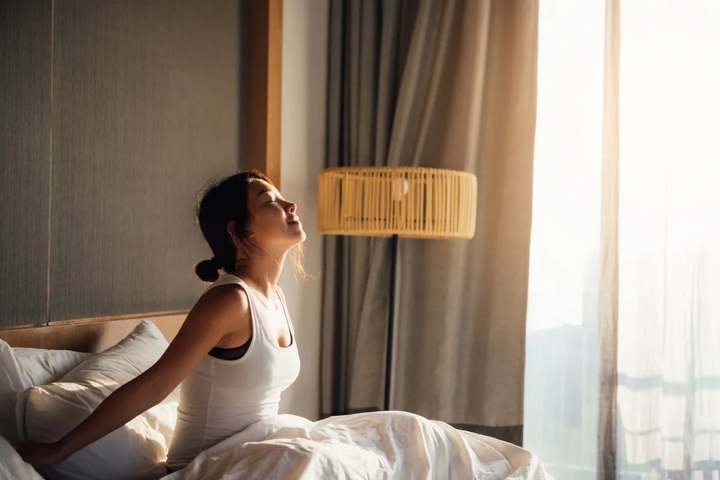
Leave your curtains open to let light in as the sun rises. As tempting as those blackout curtains may be, they can interfere with your body's natural rhythms. Unless you need them so you can work the night shift, leave your curtains open and let the rising sun work its magic on your brain.
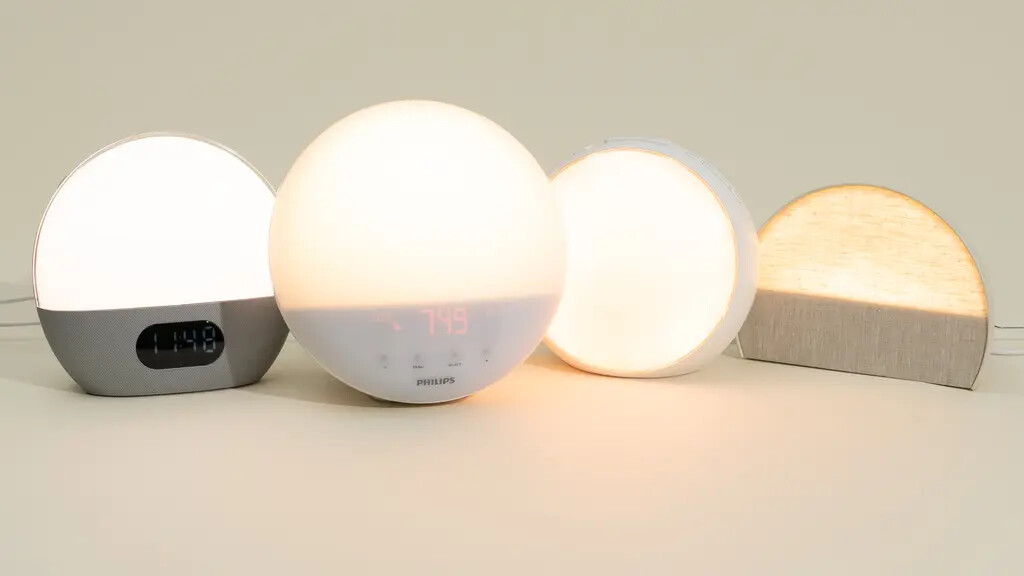
Use a sunrise alarm clock to mimic natural light. Not all alarm clocks rely on the traditional loud, irritating sounds to get you out of bed. Sunrise alarms simulate natural daylight, give you a similar effect to sunlight in the morning and stir up that morning serotonin boost. These can be especially helpful if you have to wake up before sunrise. theLumie Bodyclock Shine 300, the Casper Glow Light and the Phillips Smartsleep Wakeup Light are a few great options.
Go outside in the early morning sun for 30-45 minutes within an hour of waking up. We covered this point above, but we'll reemphasize it here. Remember, no sunglasses, no windows and no visors. Just unfiltered sunlight. Even when it's cloudy, you'll still get the benefits of morning sunlight.
How to get more light exposure during your day
Daylight is so important for your body's internal sleep clock, not to mention your mental health. That's why it's important to find ways to make sure it's part of your routine.
Plan for those morning walks or a quiet morning on the patio. Open the shades and let plenty of natural light into the home in the morning. If it's difficult to do this or you rise well before the sun, you can try a light box. These are most effective for 20-30 minutes and with around 10,000 lux of bright light. Before you use a light box, however, be sure to discuss it with your doctor.
A good night's rest will always make it easier to wake up, but that good rest starts long before you hit the pillow at night. Exposure to sunlight and artificial forms of daylight, especially in the morning, can establish healthy rhythms and set your body up to wake up naturally and gently each day.
The link between light and your circadian rhythm
Like most other living creatures, we humans have a built-in clock that regulates our sleep-wake cycles. This biological clock is tied to circadian rhythms, which are various physical, mental and behavioral changes that occur based on the cycle of night and day.
That means your body responds differently depending on the time of day, particularly after you wake up and before you usually go to bed. Studies show that our brains are most sensitive to light from about 2 hours before we usually go to sleep until about an hour after we wake.
Later in the day, when it's dark outside, your body produces more melatonin, which is a hormone that helps regulate your sleep cycles. When melatonin production increases, your body naturally transitions into a resting state.
During the day, your body suppresses melatonin production. Overnight, when light exposure is minimal, melatonin production can increase by as much as three to 10 times its daytime amount. Exposure to light during the nighttime, especially when you normally sleep, can block melatonin production and make it more difficult for you to fall or stay asleep. It can also disrupt your sleep cycles, limiting your time in deep sleep, which is critical for restoring your body and mind.
How sunlight affects your brain
Although these circadian rhythms are affected by various aspects of our daily behavior and patterns, nothing is more important than light. For most of human history, our bodies have relied on the simple rhythm of waking up to sunlight and sleeping in the dark.
Even when your eyes are closed, the photoreceptors in your retina can sense the presence of sunlight, which triggers your brain to begin waking up. Melatonin production decreases, and your body begins boosting its production of other hormones, particularly serotonin and cortisol. These hormones are linked to important aspects of our waking routines, such as mood and alertness.
Our brains are so dependent on sunlight that a lack of exposure can disrupt our sleep cycles and cause mental health problems such as depression and other mood disorders. During winter, about 5% of adults in the US experience increases in these problems, an issue known as seasonal affective disorder.
The benefits of light therapy
Because of the important relationship between light and our brains, scientists have experimented with various ways to use sunlight and artificial light to treat certain mental health conditions. This practice, known as light therapy, is still relatively new, and many of its benefits are still being studied.
Treatment times vary based on the person and condition, but light therapy sessions usually consist of around 30 minutes of direct light exposure. Depending on the issue, some people may benefit from full-spectrum sunlight (or an artificial equivalent) or targeted exposure to certain parts of the light spectrum. For instance, green light may help treat migraines, while some evidence shows that red light might be useful for treating wounds.
Broadly speaking, light therapy may help patients who suffer from:
Seasonal affective disorder
Depression
Sleep disorders
Jet lag
Dementia
These benefits of light therapy are promising. However, as with any type of treatment, it's a good idea to talk to your doctor before you begin. Light therapy may not work well if you have vision-related conditions, suffer from light sensitivity or bipolar disorder or take certain medications.
Morning light therapy
As mentioned above, our bodies are most sensitive to light from about 2 hours before bedtime until about an hour after we wake up. Because of this natural cycle, light therapy is generally most effective when it occurs early in the morning, within that first hour after waking.
Although you can use a light box to do this (more on those below), your best option for light in the morning is direct exposure to sunlight, particularly through your eyes and not through a window or sunglasses. No, this doesn't mean you should stare at the sun. Simply go for a walk or sit on your porch to soak up the sun's rays. Going outside for 30 to 45 minutes to take in some unfiltered sunlight in the morning can help your body wake up and establish better, more consistent sleep-wake cycles.
Read More
 English
 English
 Español




 IPv6 network supported